
The unlock wasn't faster code
For a long time, the question we kept asking was how to ship work faster. We found a better answer almost by accident: stop thinking in projects, and start thinking in systems.
When we rebuilt Drive Phase from the website all the way through to our AI agents, the thing that changed wasn't our typing speed. It was that the whole business started to run as one connected machine — and once it did, the output, the quality, and frankly how much we enjoyed the work all moved at the same time. We now run the majority of our day-to-day from the Claude desktop and mobile apps. We stopped relying on offshore developers entirely. And the work we ship is better, because more of our time goes into thinking and less of it into grinding.
That system is what we now call the Growth Engine. Here's what it is, what it did to us, and why we made it the thing we do for other businesses.
What the Growth Engine is
The Growth Engine is one owned system made of three components — Experience, Foundation, and Intelligence — that work as a single machine instead of a pile of apps.
That distinction is the whole point. Most businesses run on disconnected tools: a website that captures nothing, data scattered across a dozen subscriptions and spreadsheets, and no owned logic underneath any of it. An engine is parts working together. A pile of disconnected tools is parts in a box. The leverage is in the chain — and the chain is the part you can't rent.
The three aren't equals. Foundation is the spine — the data and logic you own — and Experience and Intelligence rest on it. Experience brings in more revenue, Intelligence gives you back time and quality of life, and Foundation is what makes both of them possible and keeps them from decaying. It saves real money, too — but that's a consequence of owning the spine, not the reason it's there.
Experience — more revenue
Experience is everything your customer touches: the website or mobile app and the interactive flows they actually move through. Ours is fast and fully customizable, because we own it outright — no template ceiling, no platform tax.
That ownership matters more than it used to. Search is changing fast, and being found now means both ranking in classic search and showing up inside AI-generated answers. When you own the experience, you can adapt the day the rules change instead of waiting on a platform to catch up.
The bigger shift is what the site does. A brochure site points at your business. An Experience layer is part of the business — online quoting, booking and buying, customer portals where people check the status of an order or a job without calling you. Every one of those interactions removes friction from the path to a sale, and every one of them feeds the system underneath. That's why Experience is the revenue component: it converts, it captures, and it opens up a top-of-funnel most of your competitors haven't touched.
Foundation — the spine you own
Underneath the Experience sits the Foundation: the data and the logic that run the business — your system of record and your rules, built to be read and written by your team and by AI agents alike. It's the spine everything else stands on. The site feeds it, the agents act on it, and neither lasts without it. It's also what makes the business AI-operable in the first place — AI can only create leverage on a business it can actually reach.
Foundation is where the money leaks get sealed. The manual data entry disappears. The pile of overlapping subscriptions collapses into one system you own. The coordination overhead — the copying between tools, the spreadsheet three people update — goes away. And because you own the data and the logic, there's no lock-in: no platform holding your business hostage at renewal.
It's the least glamorous component, and the one that quietly pays for itself the fastest.
Intelligence — time and quality of life
Intelligence is the layer that acts and thinks on top of the Foundation, and it shows up in two ways.
The first is the agents, working both directions. Inbound agents pick up the calls, texts, and requests coming at your business — answering, qualifying, scheduling, capturing every lead instead of letting it ring out. Outbound agents handle lead capture and follow-up on their own, so the front of your business keeps moving whether or not you're at a desk.
The second is the one that changed our days the most: a command center. We run the business by talking to Claude on desktop and mobile, wired into our own Foundation. Not a generic chatbot — Claude acting on our actual data. Ask it where something stands, tell it to update a record, hand it the kind of grunt work that used to eat an afternoon, and it does it against the real system. Internal work that used to take days collapses into minutes, and it happens from wherever you are.
That's why Intelligence is the time-and-quality-of-life component. It's the one you feel. It's the difference between running the business and being run by it.
The force multiplier
Each component earns its keep alone — a faster site that converts, a back office that stops bleeding money, agents that take work off your plate. But the real return shows up when they're connected.
The Experience generates real events into the Foundation. The Foundation gives the Intelligence layer true context to act on. The Intelligence layer pushes improvements back out into the Experience. It's a loop, and loops compound. A pile of tools degrades over time as integrations break and data drifts. An engine gets better, because every part feeds the others. That compounding is the whole argument for building the engine instead of bolting on one more app.
It grows with you
A pile of tools is frozen the day it's installed, and starts decaying from there. An engine does the opposite: it grows with you. As your business changes — new products, new locations, new ways you want to work — the system bends to fit instead of forcing you back into someone else's template. And as the world changes — new tools, new channels, search and AI shifting under everyone's feet — it keeps pace, because you own it and can move the day the rules change instead of waiting on a platform to catch up. You end up with a system you don't outgrow and that doesn't fall behind.
We ran it on four of our own businesses first
None of this is theory for us. Before we ever sold the Growth Engine, we ran it on four businesses of our own — three we own outright, plus Cigar Social Network, which we're building in partnership. Four different shapes of business, the same engine underneath.
Drive Phase. Our own shop was the first test. Output is up roughly 5x, and we let our offshore development relationships go — not because anyone underperformed, but because the system didn't need them. Quality went up, because the time we used to lose to coordination now goes into planning, and we run the whole business by talking to Claude on desktop and mobile. The work got more enjoyable in less time — that's the reason we kept going.
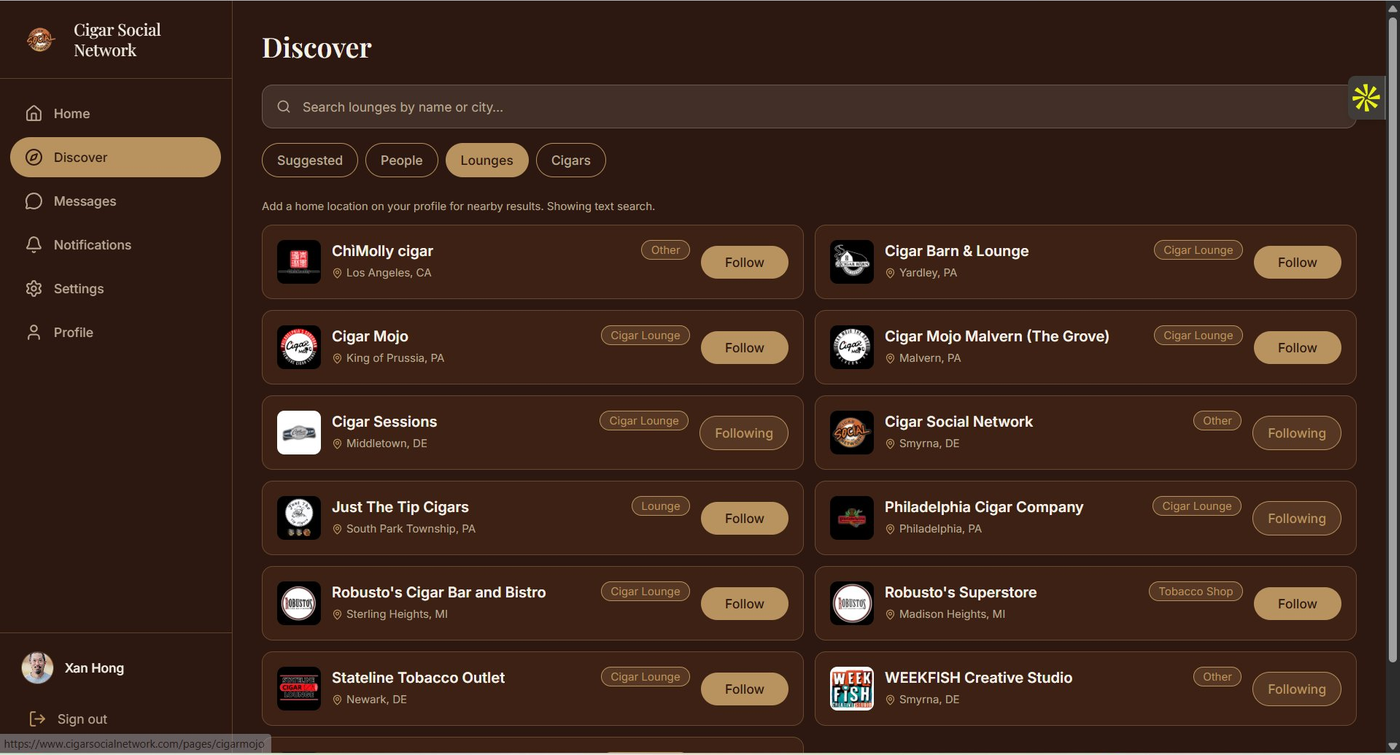
Cigar Social Network (a partnership). A social platform for cigar enthusiasts and the lounges they follow, built on the engine in partnership. Keeping the catalog current used to mean a developer, a spreadsheet, and a queue — now it's managed by conversation, 300 cigars added in minutes. And because the whole thing runs on the engine, the team turns user feedback into shipped changes fast, with no feature or design ceiling to work around.
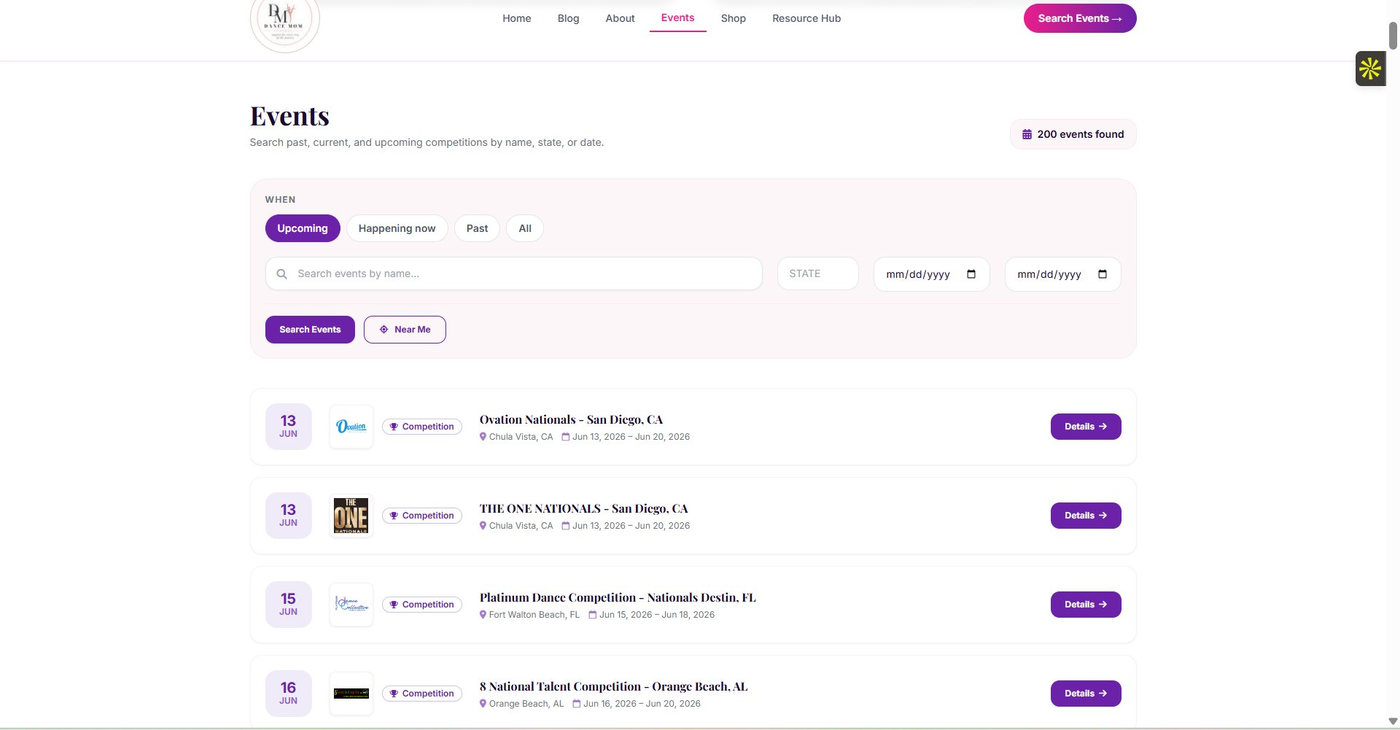
Dance Mom Central. A central hub for competitive dance moms. We replaced an inflexible WordPress site with one that can be customized without limits, then loaded hundreds of competitions into a searchable database the same way. WordPress capped what the product could become; the engine took the ceiling off.
Just Paint By Number. An e-commerce store stuck on WordPress — slow, capped by its theme, bleeding money to hosting and constant plugin support. Rebuilt on the same engine, the results compounded: traffic is up over 162% against the same period last year, organic alone up over 104%, and the site now scores in the high 80s to low 90s for speed. The design ceiling is gone, we cut over $300 a month in hosting and tech support, and new products go live straight from a ChatGPT conversation.
The part that convinced us it truly grows with you wasn't a plan — it was how fast we could change it. When we want the engine to do something new, the answer is days, not quarters. We recently added a genuinely complex feature to one of these in a couple of days — the kind of build that used to mean a written spec, an offshore queue, and weeks of waiting. In an environment that refuses to sit still, being able to adapt your own technology that quickly stops being a convenience and becomes the advantage. That's the capability we now hand to the businesses we build for: an engine that keeps moving as fast as they need to.
Why it's now our core offering
The impact was dramatic enough that keeping it to ourselves felt like the wrong call. So we packaged the Growth Engine as our core service — not a website project, not an automation here and there, but the whole connected system, built and owned by you, that grows with your business and keeps getting better over time instead of decaying into another stack of subscriptions you babysit.
Find your Growth Engine Score
Most owners can feel that their tools aren't pulling together, but can't say exactly where the leverage is. That's what the Growth Engine Score is for.
It's a free, instant diagnostic — eleven questions, real site measurement — that scores your business from 0 to 100 across all three components: the revenue you’re leaving on the table, the money you’re spending that you don’t need to, and the hours you’re losing. You get the score, a prioritized findings report, and a roadmap with a value estimate on each move.
Get your free Growth Engine Score →
The Growth Engine started as the system we needed. Now it's the one we build for you. Find your score, and we'll show you what your business looks like running as one machine.
Growth Engine Score
Find out where your business is losing momentum
Answer 11 questions, get your site measured live, and see your score in under 10 minutes — free.
Get Your Growth Engine Score →